
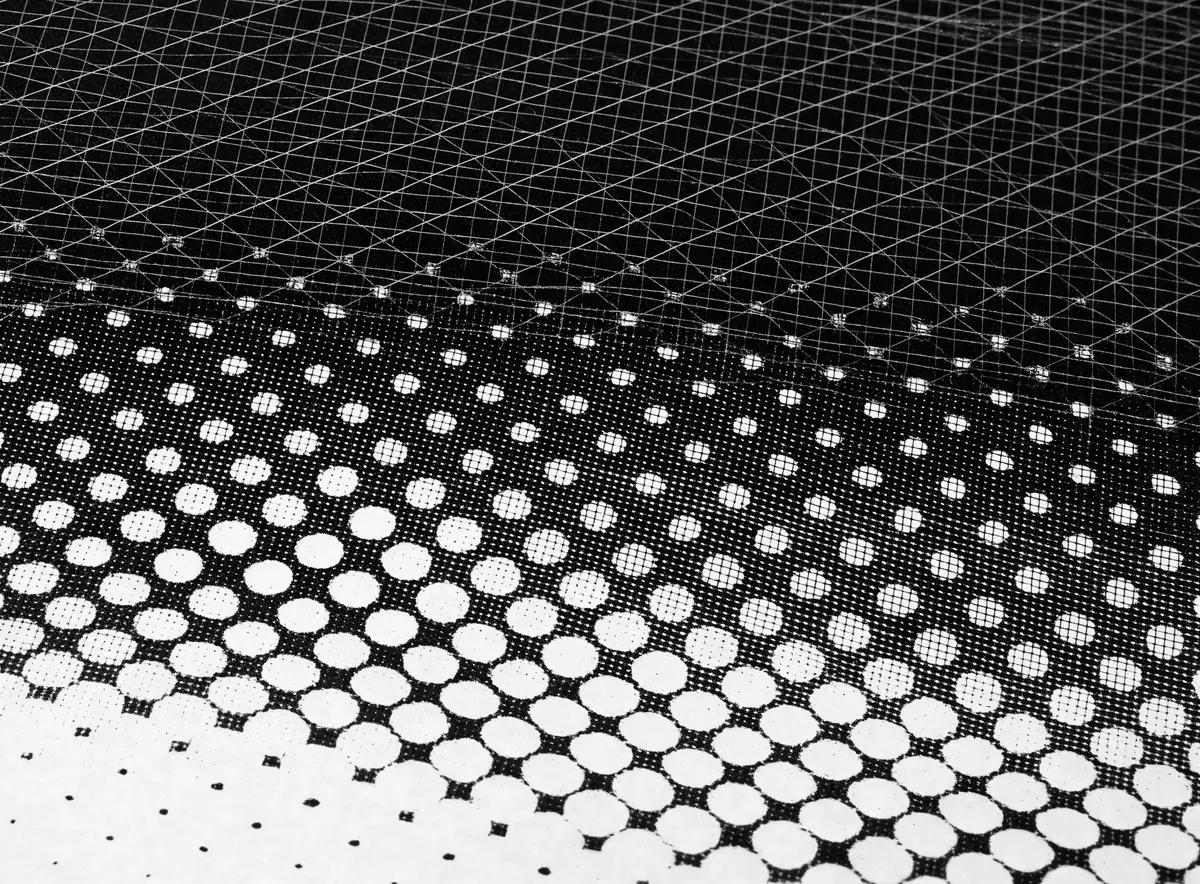
04Simulated process · Photoreal · Up to 18 colors
Simulated process
screen printing.
Photoreal art on dark and light garments, built from halftone separations and printed up to 18 colors in a single pass. The separations are built here, in Phoenix, and the run ships nationwide.
- Ink applications
- 14
- Colors, one pass
- 18
- Mesh
- 230
- Flash temp
- 320°F
01How a photo becomes screens
From a picture
to eight screens.
Simulated process rebuilds a full color image from a handful of spot color screens, each one a halftone, printed in order on top of a white underbase. The dot carries the image.
- 01Separate
Built in house
Art is separated and output here. Send layered files where you have them and we work from your originals, choosing the screens that rebuild the image.
- 02Screens
230 mesh, 25µ
Each separation is burned to a 230 mesh screen at 25µ of emulsion, fine enough to hold the halftone dot that carries the tone.
- 03Print
One revolution
White underbase first on dark garments, then each color in order, up to 18 in a single pass, held to ±0.5 mm registration.
- 04Cure
The tunnel
Flashed at 320°F between screens, then tunnel cured and wash tested so the print outlasts the garment it sits on.
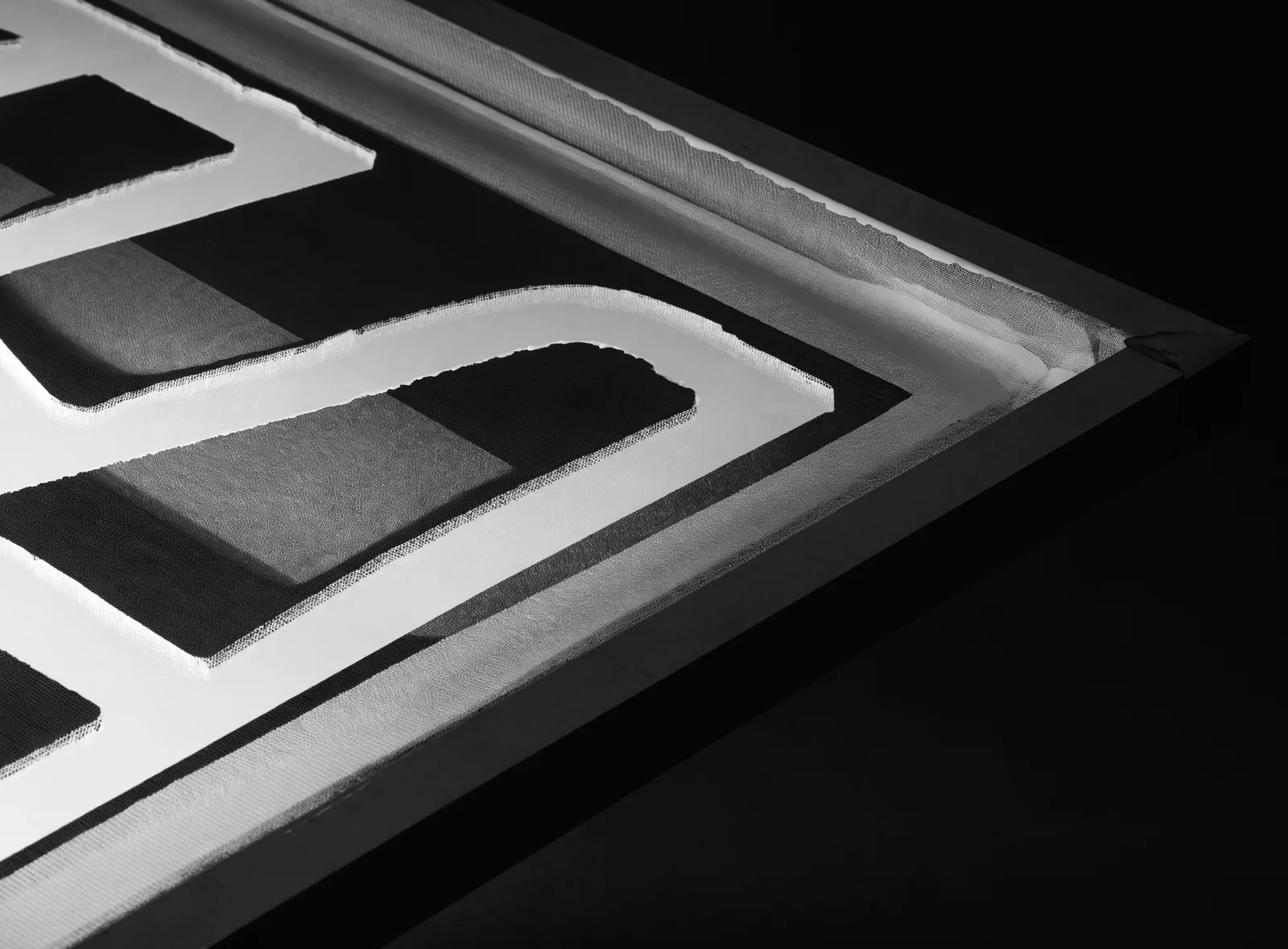
in house.
02Eight screens, one impression
The demo set,
screen by screen.
The anatomy on the home page pulls a print apart into its separations and puts it back together as you scroll. This is the set it uses, a Sonoran desert scene, not a customer job.
- White underbaseScreen 01
- Desert skyScreen 02
- Slate sunScreen 03
- Charcoal mesaScreen 04
- Desert floorScreen 05
- Sand & heatScreen 06
- OcotilloScreen 07
- Black saguaro · Last downScreen 08
Why simulated, not four color
Four color process rebuilds an image from cyan, magenta, yellow and black, which needs a white garment to work. Simulated process picks the actual colors in the art, prints them as halftones over a white underbase, and holds up on black tees, where most photoreal apparel lives.
03The specification
The press,
in writing.
Photoreal work is where registration, mesh and cure show. These are the numbers every run is printed to.
| Colors, one pass | 18 | Including simulated process. Most programs land well under that. |
|---|---|---|
| Max print area | 20 x 28 in | Placement is confirmed against your garment before anything burns to screen. |
| Registration | ±0.5 mm | Automatic press, tunnel cured, wash tested. |
| Mesh · emulsion | 230 · 25µ | Squeegee 70A. Flash temp 320°F. |
| Before production | Sample | A high resolution digital proof, a written print spec and an approved sample before the run starts. |
| Inks | Compliant | Lead free and phthalate free. Compliance documentation is supplied with the program on request. |
04Questions
Photoreal,
answered.
What buyers ask before a simulated process run, answered straight.
- Yes.
Can you print photoreal art?
Simulated process runs up to 18 colors in one pass, and we build the separations here.
- Yes.
Does it work on black shirts?
That is what it is for. A white underbase goes down first and the color screens print over it, so the image holds on dark garments.
- Layered.
What art do you need?
Send layered files where you have them, at high resolution. Art is separated and output in house, so you do not need to supply separations.
- Usually fewer.
Do I need all 18 colors?
Up to 18 colors run in a single pass, but most programs land well under that. The separation decides how many screens the image needs.
- Yes.
Do I see it before the run?
You get a high resolution digital proof and a written print spec, and an approved sample before production starts.
- Yes.
Can you combine it with specialty inks?
Specialty screens can run in the same design; the written print spec calls out each one.
Talk it through sales@halftonetextilemfg.com
Quote a photoreal run